


In three days, the market priced SpaceX at above $2 trillion a sub-frontier model, Anthropic shipped a real capability jump in Claude Fable, and the government forced Fable offline. The hot takes agreed that this meant the frontier is scarce, so open sources win. But this misreads commoditization. Intelligence commoditizes as a process, and the relationship between open source and frontier is symbiotic, rather than strictly oppositional. The frontier leads by a few months. That lead diffuses outward into the enterprise and into cheaper models as they catch up. The Orchestration Economy is predicated on the idea that diffusion never stops. Fable’s shutdown is the first time it stopped on command. When that happens, it has implications for the frontier, open weights, and orchestration. That becomes everyone’s problem.
Three days did more to expose the structure of the agentic economy than the previous quarter.
Anthropic shipped Claude Fable on June 9th, and for two days, the conversation was about a real jump in capability rather than another point on the frontier model leaderboard.
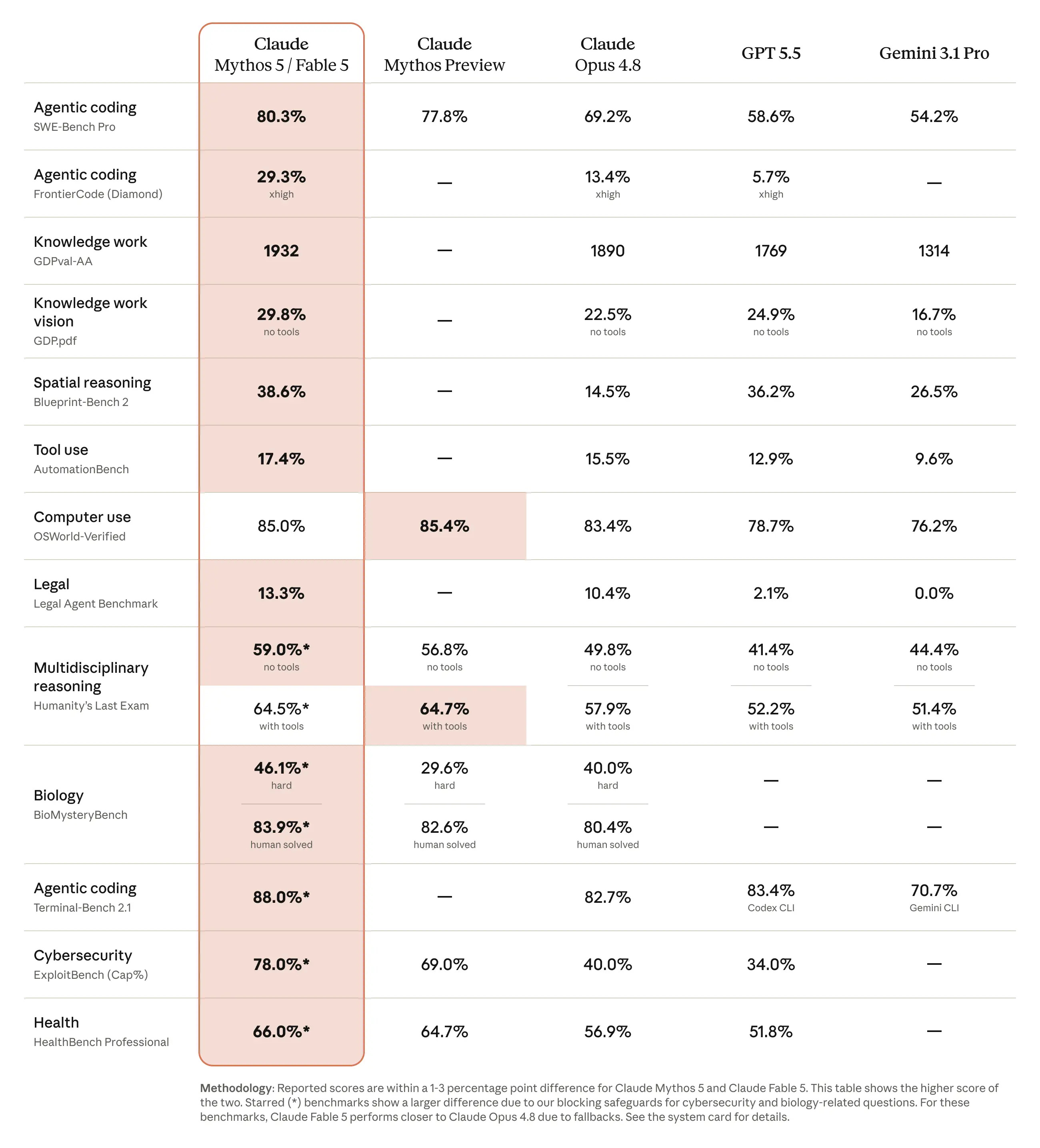
On June 12th, the market priced SpaceX at $2.1 trillion after the first day of trading, despite its AI division, whose model is far from the frontier.
At 5:21 p.m. that same afternoon, the U.S. government delivered an export control directive to Anthropic ordering it to block access to any “foreign national,” a move that resulted in the company switching Fable off, not for Americans, not for a region, but for everyone on earth.
The new conventional wisdom that emerged identified the clear lesson: the frontier is becoming geopolitically scarce, so open-source wins. It offered a certain amount of reassurance because if the closed frontier can be imposed by a letter from the U.S. Commerce Department, the future must belong to the weights that no government can barricade.
The conclusion is appealing because it treats the frontier and open source as opposing forces. If governments can restrict one, the other must benefit. But that framing mistakes the relationship between them. The frontier and open source are not competing systems. They are successive stages of the same economic process. The frontier generates new capability. Open source absorbs it. Enterprises operationalize it. The reason intelligence appears to commoditize is not that the frontier stops mattering, but because each new increment of capability eventually diffuses outward through the rest of the ecosystem.
This distinction matters because commoditization is not a state. It is a flow. Intelligence does not commoditize by standing still while the field catches up. It commoditizes by diffusing. New capability appears at the frontier and then spreads through distillation, open weights, lower-cost models, enterprise products, and agentic systems until yesterday’s breakthrough becomes tomorrow’s baseline.
Once you see how the process runs, then last week stops looking like a verdict for open source and starts looking like something less comfortable: the first deliberate interruption of a mechanism the whole AI economy depends on. What the Commerce Department severed was not simply access to the frontier. It severed the channels through which frontier capability becomes abundant.
A central pillar of the Orchestration Economics framework is the collapse of the marginal cost of cognition. As intelligence becomes increasingly abundant, intelligence ceases to be the primary source of scarcity.
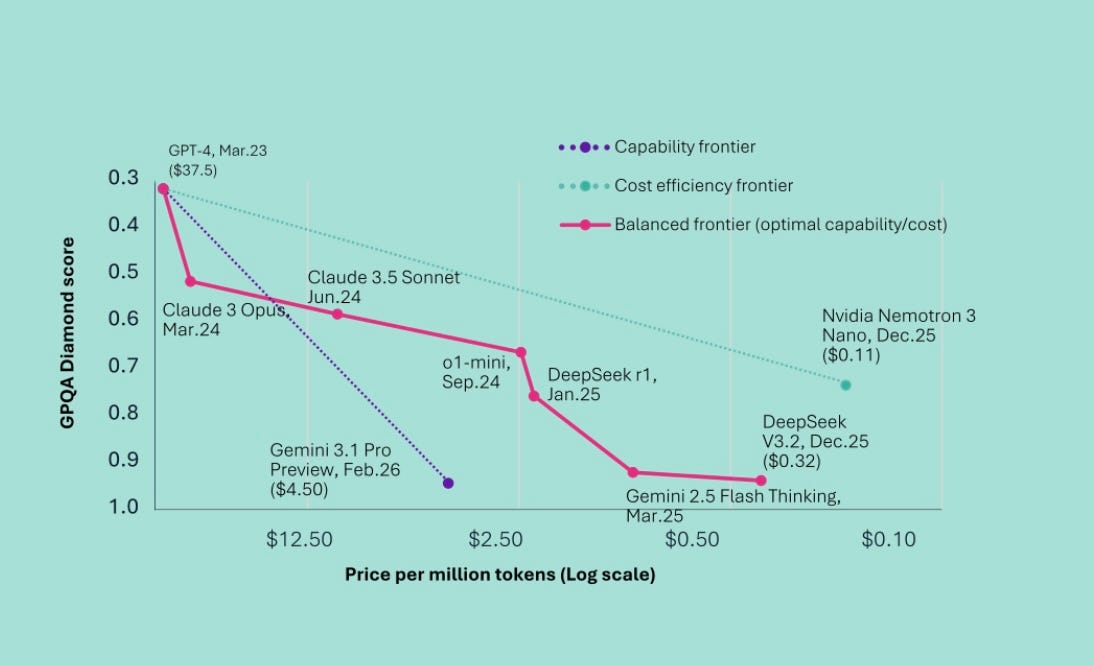
Value, therefore, migrates toward the systems that direct, coordinate, and embed intelligence in real operational environments. The prize ceases to be the model itself and instead becomes the orchestration layer surrounding it.
That framework implicitly assumes diffusion continues. Fable demonstrated that diffusion can be interrupted. Once it becomes interruptible, frontier access ceases to be merely a source of innovation and becomes a strategic dependency, a supply-chain risk, and a new source of scarcity. The abundance of intelligence turns out to depend on a process that governments can slow, restrict, or stop altogether.
This creates a more uncomfortable question than the one the public debate immediately settled on. The question is not whether the frontier matters. The market answered that one twice in the same week: once by assigning a $2.1 trillion valuation to a company whose flagship model is not at the frontier, and once by reacting with alarm when access to a frontier model disappeared overnight. The question is how those two facts can be true at the same time.
The answer lies in the mechanism that connects them: diffusion. To understand why last week matters, we need to begin with how commoditization actually works.