
Orchestration Economics: What the AI Labs Are Really Building (Chapter 12)
As OpenAI and Anthropic race beyond models, coding agents, control planes and enterprise context are becoming the real battleground. These are the keys to justifying their soaring valuations.

This is the latest excerpt from AGNT: The Orchestration Economics Manifesto - An Investment Framework for the Agentic Era. Each Thursday, I explore a major theme of the Manifesto and unpack the frameworks, adding extra context with more recent developments. Note: The figures and sequential references are taken directly from the larger Manifesto that was originally published in April 2026.
The LLM battlefield has shifted. To understand the new frontline, however, one must understand how the terrain has transformed under the feet of the LLM giants since ChatGPT was first released in November 2022.
For much of the post-ChatGPT era, public attention remained fixed on model capability and generative AI. As 2025 began, agents were barely part of the discourse, let alone agentic AI. The benchmark to measure who was ahead in the generative AI race came down to model power. By the summer of 2025, conventional wisdom held that OpenAI had built a commanding lead in terms of model power, app downloads, compute deals, market share, and mindshare.
Less than one year later, conventional wisdom has been turned on its head. OpenAI is scrambling to catch up to Anthropic’s structural advantages. The models are commoditized table stakes, albeit extraordinarily expensive ones. And the LLM labs are leaving the model layer behind. They are building platform companies. The fight is now for the Orchestration Layer.
The distinction between these two layers is the difference between fragile and durable. Model intelligence answers the question: Can the AI do this task? Orchestration answers the question: Can the AI do this task, here, within this organization’s systems, rules, and workflows, reliably enough that the organization will depend on it?
The evolution of this competition was, of course, influenced by many of the technical and economic factors we have already defined. But the decisive shift that changed the trajectory of this battle and clarified the new agentic dynamic came from somewhere else, somewhere very specific. It came from coding.

The Coding Wedge
Anthropic released an early version of Claude Code in February 2025 and then made it more generally available in May 2025. OpenAI unveiled Codex in May 2025. At first glance, these looked like developer tools. In fact, they marked a turning point in the enterprise adoption of agentic AI. The evidence was visible by mid-2025. In the “State of AI in the Enterprise” report by Menlo Ventures released in July 2025, Anthropic’s share of enterprise budgets had climbed to 32% from 24% since the start of 2024, while OpenAI’s had declined from 34% to 25%. By the end of 2025, Anthropic’s US market coding share had climbed further to 54% of the US coding market compared to 21% for OpenAI.
Again, the popular perception was that OpenAI was a juggernaut that was running away with the LLM prize. But in the trenches, it was Anthropic winning the battles for budgets and developers. As I analyzed this dynamic on behalf of clients to better understand what was driving this adoption, I gave it a name: The Coding Wedge.
Even now, months later, people view the impact of Claude Code with a facile, surface-level framing that is anchored in the previous paradigm. It’s a good product. Anthropic has strong marketing. It went viral. The brand resonated. Perhaps some or all of these are true at the margins. But these fail to recognize the core structural dynamic at work.
Software engineering was the first domain where autonomous agents crossed the threshold from experimentation to reliable production use. It is uniquely suited to this transition because it concentrates three properties that rarely coexist in other enterprise workflows:
Code lives in a highly structured environment. Every task requires sequencing, dependency management, decomposition, and recombination. Writing software trains models on the primitives of orchestration.
Code offers objective ground truth. It either compiles and runs, or it fails. That deterministic feedback creates a fast verification loop unavailable in most other domains. The model can act, test, correct, and improve against clear signals.
Code has unusually high economic leverage. Every productivity gain in software engineering compounds through the products that the team builds, the workflows it enables, and the businesses those products support.
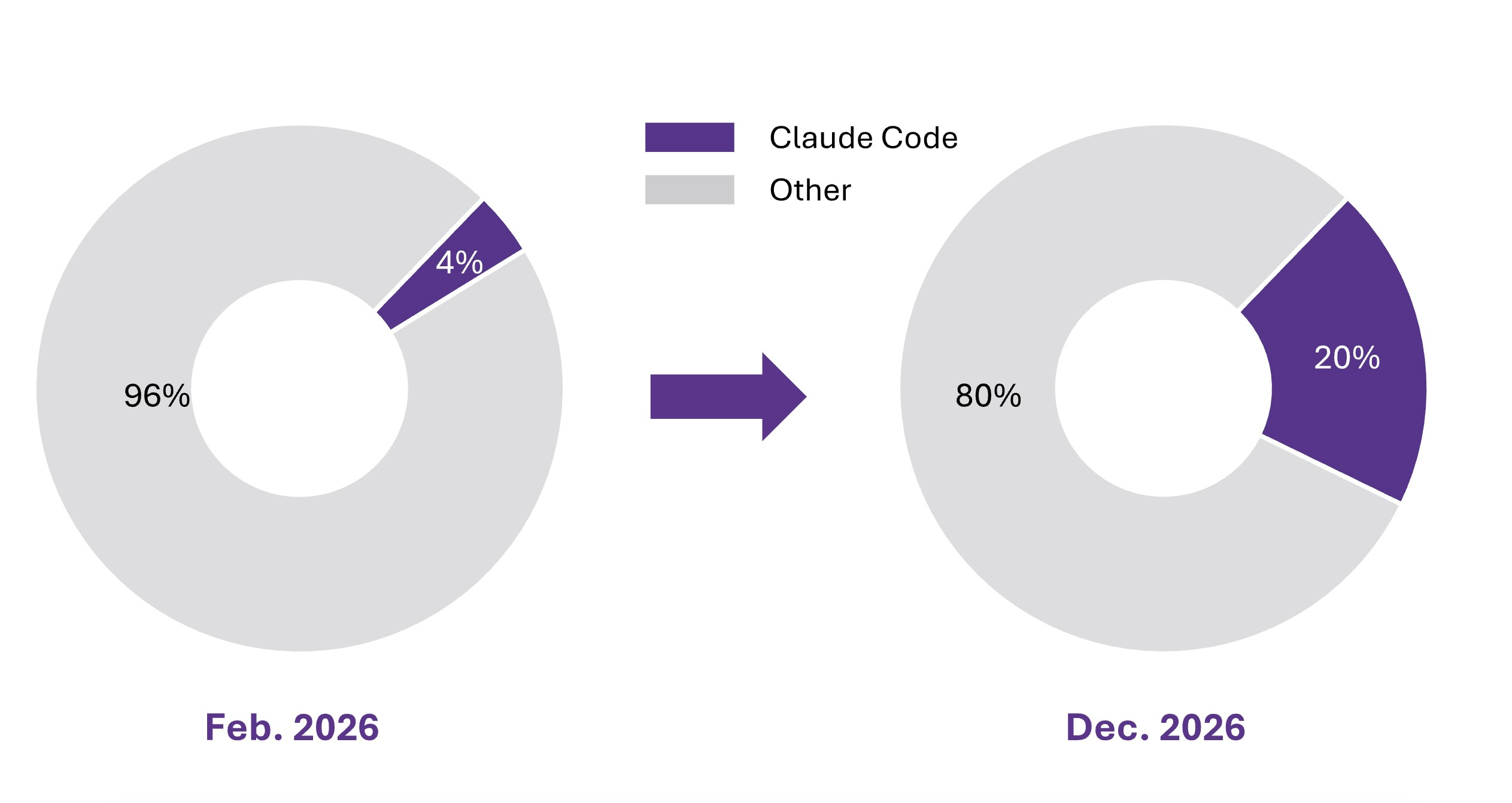
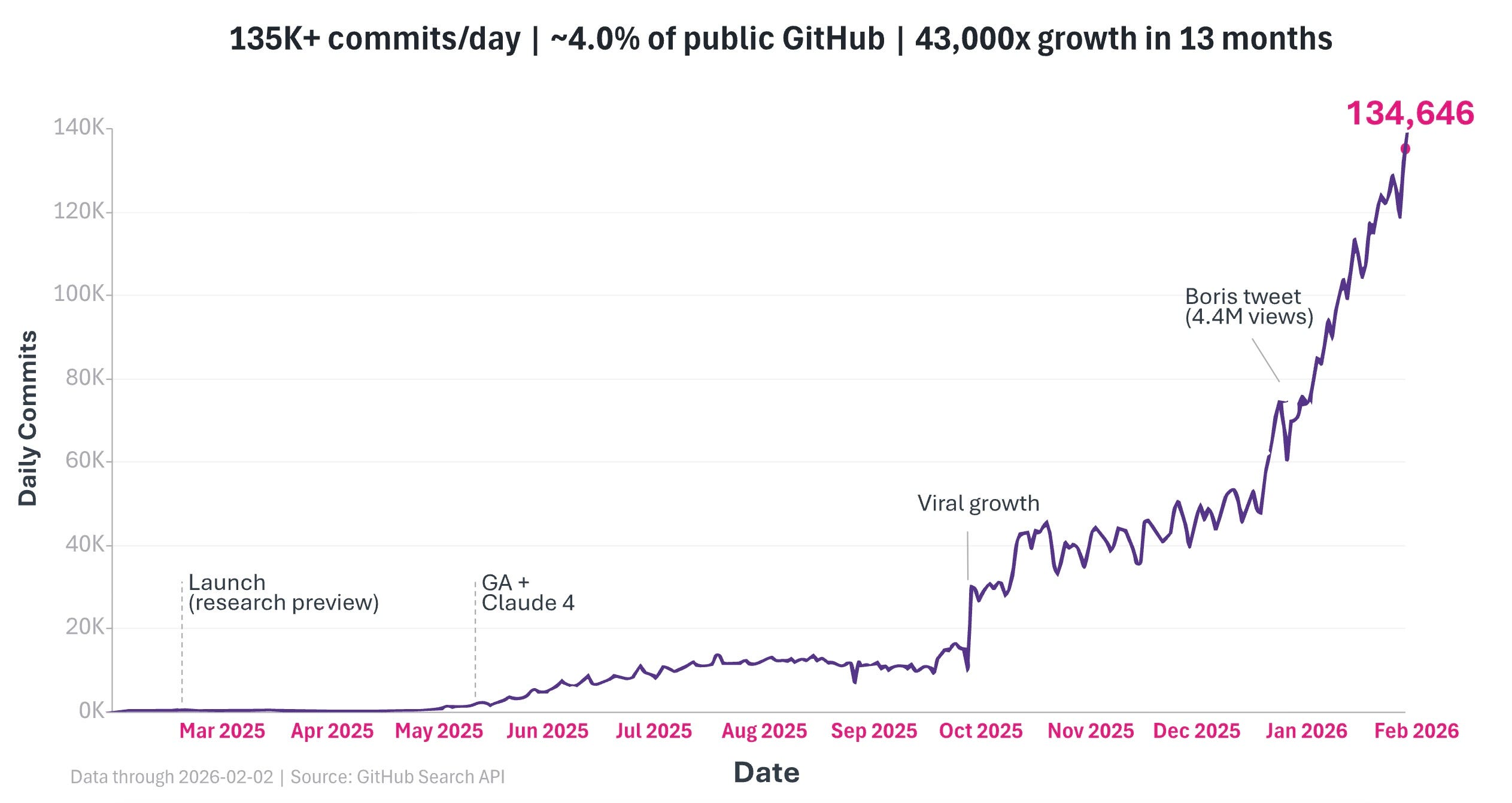
That combination made it the natural entry point for every lab seeking to move from model provider to orchestration platform. The adoption data reinforces this. Cursor, an AI-native code editor, raised funding at a $29.3 billion valuation. Claude Code surpassed $2.5 billion in ARR, with business subscriptions quadrupling since the start of 2026. And 4% of all public commits on GitHub worldwide were authored by Claude Code as of February 2026, with as much as 20% projected by the end of 2026. The coding wedge is not theoretical. Coding is the fastest-growing category in enterprise AI.
Rather than being about code completion, the coding wedge is about controlling the first enterprise domain in which agentic systems became reliably deployable. The deeper strategic point is even more important: coding agents are not merely coding tools. They are general-purpose agent Harnesses disguised as developer products.
That is what the coding wedge really is: the first opening through which orchestration enters the company. The progression was not accidental. It was strategic. Win developers through the coding wedge, then expand to the broader enterprise through the trust, behavioral patterns, and organizational adoption that coding establishes.
However, as noted in Chapter 2, Anthropic had another powerful tool in its arsenal: MCP. Released as open source in November 2024, this protocol rapidly became the industry standard for agent-to-system integration, even adopted by OpenAI and Google. This gave Anthropic a structural edge. The axis of competition had rotated from “which model is best?” to “whose ecosystem is most deeply embedded?”
That rotation could not be reversed by a single model release, however impressive. Anthropic’s coding advantage also became a powerful development lever. First, Claude Code won developers. That became a wedge to win enterprise customers. But it also became a method for learning the architectural strengths and weaknesses of agentic AI to extend it to general knowledge work.
Two Architectures, Two Bets
The new terms of this rivalry were on full display in early February 2026 as demonstrated by the volleys exchanged between the “Great Model Powers” across business systems. Every significant product that OpenAI and Anthropic have shipped in the final months of 2025 and the beginning of 2026 revealed that neither company believes the model layer alone can sustain their soaring valuations.
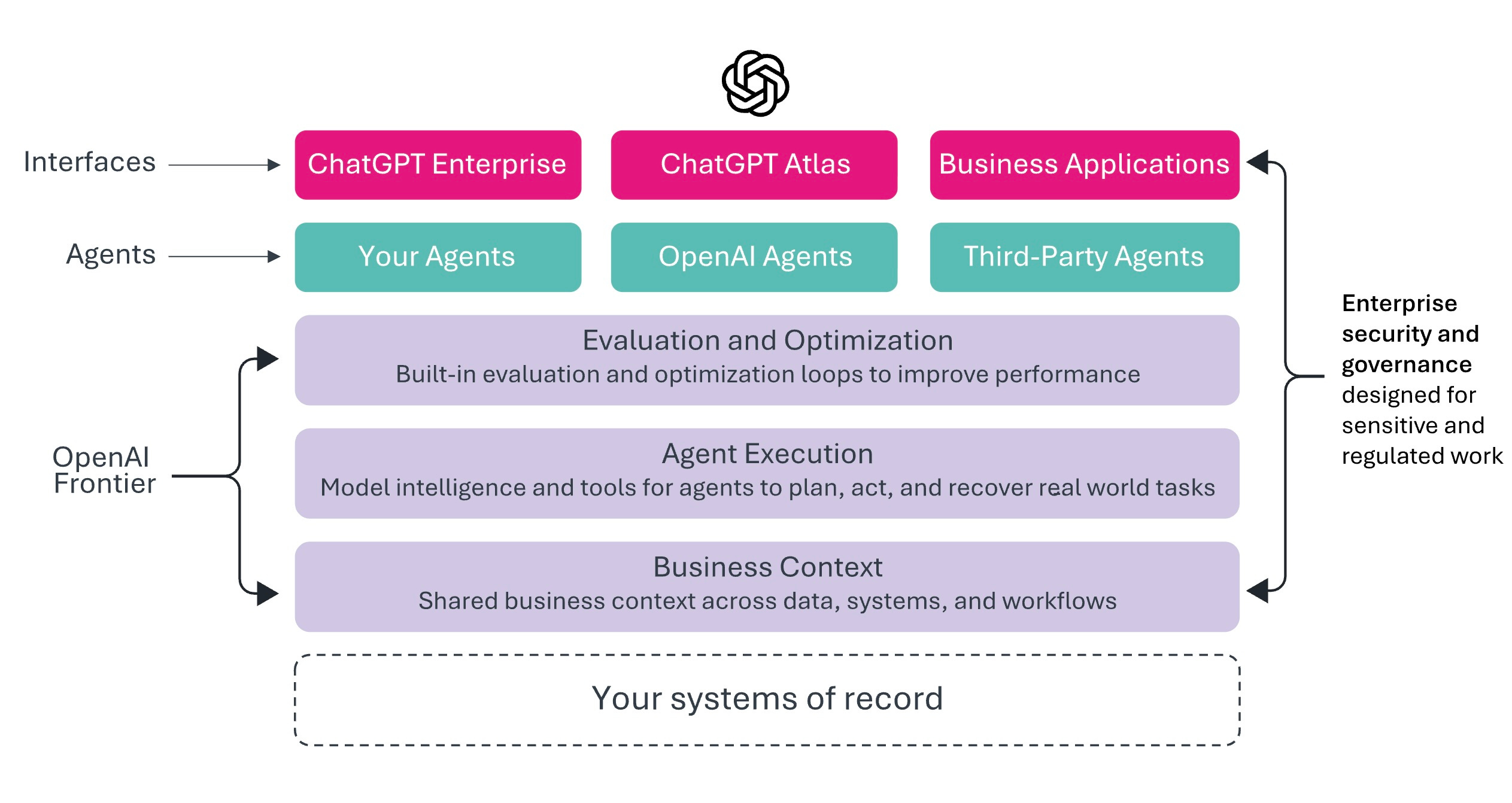
On February 5, OpenAI announced the latest release of Codex, its coding platform. This represented a critical moment for the company as it sought to regain ground in the critical fight for the coding wedge. OpenAI acknowledged this directly at the launch of Codex, describing coding as the foundation for a much broader class of knowledge-work agents. As part of that effort to extend its value to developers, OpenAI concomitantly launched Frontier, an enterprise platform for deploying and managing AI agents across business systems.
Meanwhile, Anthropic had leveraged Claude Code to create Cowork, and then the vertical plugins that triggered the “SaaSpocalypse.” And then, a couple of weeks later, it closed a $30 billion funding round at a valuation of $380 billion, more than double its $183 billion valuation from just five months earlier in September 2025, and the second-largest private funding round in technology history. Finally, in late May, Anthropic announced a $65 billion Series H funding round at a $965 billion valuation.
This all points to the real story.
Consider that $965 billion valuation. At $47 billion ARR, that represents a 20.5× multiple. That is notable because after the February funding, the reported $14 billion ARR implied a 27x multiple. So, revenue has reportedly grown fast enough that the headline multiple has compressed.
Still, if Anthropic is a model company selling intelligence in a market where the intelligence is converging, then this is an extraordinarily aggressive bet on a commoditizing asset. Especially in light of the recent release of Kimi K3. But if Anthropic is a platform company, selling orchestration, workflow coordination, and accumulated enterprise context, then 20.5x may be the entry price for a generational enterprise franchise.
Claude Code, Cowork, the vertical plugins, Frontier, and Codex are not model improvements. All of them are orchestration infrastructure: systems designed to coordinate AI agents across enterprise workflows, accumulate institutional context, and create the switching costs that justify platform multiples.
And yet, the two leading AI labs have arrived at the Orchestration Layer with structurally different visions. Both have real products, launched within weeks of each other, that embody different assumptions about how the enterprise AI market will evolve. Understanding the divergence is essential for valuing the companies.
Anthropic pursued the same logic from the other direction: win developers first, then use the trust, habits, and infrastructure built inside engineering teams to expand outward into the rest of the enterprise.
Agents on Frontier receive employee-like identities with scoped permissions. They connect to data warehouses, CRM systems, and internal applications through what OpenAI calls a “semantic layer for the enterprise.” They build institutional memory from their interactions over time.
The most critical thing to know is that they do not need to be OpenAI’s agents. Frontier manages agents from Anthropic and Google. About 10 days later, on February 15, 2026, OpenAI staged a minor coup by announcing the hiring of Steinberger, the man behind OpenClaw, “to drive the next generation of personal agents,” according to CEO Sam Altman.
Frontier is a Control Plane
Agents on Frontier receive employee-like identities with scoped permissions. They connect to data warehouses, CRM systems, and internal applications through what OpenAI calls a “semantic layer for the enterprise.” They build institutional memory from their interactions over time.
The design choices reveal strategic intent. Frontier’s agent identity management mirrors human HR systems: onboarding, scoped permissions, performance monitoring. OpenAI is not being metaphorical when it describes agents as “digital coworkers”. It is making an architectural claim. If AI agents operate as enterprise employees, the platform that manages them becomes as essential as the system that manages human employees. Frontier aspires to become the Workday for AI labor.
The most critical thing to know is that they do not need to be OpenAI’s agents. Frontier manages agents from Anthropic and Google. This seems to be generous. In fact, by welcoming competitors’ agents onto its platform, OpenAI concedes agent-layer competition in exchange for control-plane dominance. If enterprises standardize on Frontier for agent governance, OpenAI captures the value of orchestration regardless of which model powers any individual agent. The agents become interchangeable components. The control plane does not. This is horizontal platform logic. AWS applied to enterprise AI. It does not require OpenAI to have the best model. It requires OpenAI to have the best coordination infrastructure.
Cowork is an Agent that Became a Platform
Rather than building a management layer on top of agents, Anthropic has built outward from the agent itself. The sequence is systematic and each step compounds on the last.
Claude Code proved the model could carry out complex, multi-step enterprise tasks in the critical domain of software engineering. It generated $2.5 billion in revenue68. MCP standardized how agents connect to external systems and was adopted by competitors, including OpenAI and Google, establishing it as an emerging industry standard. Cowork extended orchestration beyond developers to knowledge workers. The vertical plugins created purpose-built entry points into specific business functions.
The strategic logic here is vertical integration. Anthropic is betting that agent quality remains meaningfully differentiated when embedded within orchestration. In that framing, the experience of using Claude to coordinate an intricate legal review or financial analysis is sufficiently superior that enterprises will build their workflows around it. This is closer to Apple’s logic: control the end-to-end experience, build an ecosystem around your product, and make execution quality the moat.
But there is a subtle departure from the Apple analogy. MCP is open-source. Anyone can implement it. This seems to undermine lock-in.
The answer lies in a finding from enterprise AI adoption research: only 11% of enterprise builders switched AI providers, even though technical substitution was trivial. The lock-in is not technical. It is organizational. When an enterprise builds workflows around Claude’s specific orchestration patterns, the cost of switching becomes operational. In this case, those patterns include its approach to multi-step reasoning, its tool-use conventions, and its plugin interfaces.
You can swap the model in an afternoon. You cannot re-tune thousands of enterprise workflows in an afternoon. Anthropic is making a layered bet: MCP creates ecosystem breadth (every system connects), Claude’s quality creates ecosystem depth (Claude is preferred within that ecosystem), and organizational adoption creates inertia (no one switches even when they could). A market phenomenon of behavioral lock-in despite technical substitutability becomes a deliberate business strategy.
The two architectures represent different bets about the speed and completeness of model commoditization. If intelligence commoditizes fully, Frontier wins. The platform that coordinates interchangeable agents captures the greatest economic value. OpenAI wins not because GPT is superior, but because Frontier is the control plane. It wins even if Claude is the better agent, because the control plane sits above the agent layer.
If intelligence retains meaningful differentiation when embedded in orchestration, Cowork wins. Enterprises do not want “any agent, well-managed”. They want the best agent, deeply embedded. And the switching costs compound with every workflow built around it.
What $965 Billion Requires
If orchestration, not intelligence, is what drives the labs’ valuations, three conditions must hold:
Orchestration lock-in must prove durable, not merely behavioral. Enterprises are not switching AI providers today. But this was measured during a period of rapid growth when no one had reason to test the limits of their commitment. The real test arrives when Frontier offers agent-agnostic orchestration at compelling economics, or when a competitor undercuts on price. MCP is open-source. It creates connectivity but not captivity. For $965 billion to be justified, the network effects must become self-reinforcing: more workflows generate richer context, produce better orchestration, and attract more workflows. This flywheel is architecturally plausible. It is not yet empirically confirmed at scale.
The coding wedge must compound. Claude Code’s $2.5 billion ARR validates the entry strategy. But the path from coding to legal, finance, HR, and general operations is the critical progression. If the vertical plugins drive cross-functional adoption, the platform thesis holds. If coding remains the dominant revenue line while other verticals grow incrementally, Anthropic is a remarkable single-function business at enormous scale. That is a different valuation than an enterprise platform.
The labs must accumulate enterprise context faster than incumbents can defend. The systems of record hold decades of accumulated institutional context: the workflow knowledge, compliance history, and operational understanding that orchestration depends upon. The labs are starting from zero. Frontier builds “institutional memory” from agent interactions. That memory is weeks old. The institutional memory embedded in a Fortune 500 company’s Salesforce deployment spans years.
The labs have speed and pliability. The incumbents have depth and irreplaceability. The labs must build enterprise context before model commoditization erodes the intelligence advantage that gives them the right to orchestrate. This is a race against the clock. The clock does not pause for fundraising announcements.
The Enterprise Tax
There is a dimension of this transformation that the market has yet to price: the expense of becoming an enterprise software company. The market narrative portrays AI labs as asset-light technology companies that are disrupting bloated incumbents. The reality is more complex.
To win the Orchestration Layer, the labs must build what every enterprise platform company before them has built: field sales organizations, customer success infrastructure, compliance certifications, vertical domain expertise, and the organizational capacity to manage thousands of enterprise relationships simultaneously.
OpenAI has embedded Forward Deployed Engineers within customer organizations. Frontier’s enterprise customers require SOC 2 Type II, ISO 27001, and a suite of related certifications. The EU AI Act begins enforcement in August 2026, introducing compliance requirements that did not exist when these companies were founded. Enterprise sales cycles sometimes stretch twelve months or longer for major deployments. These demand specialized teams that change margin assumptions for the labs.
The funding Anthropic raised in February 2026 was not exclusively for training runs. A meaningful portion of this capital will fund the construction of an enterprise go-to-market apparatus, including a sales force, compliance infrastructure, customer success organization, and vertical expertise. These are structural costs that permanently alter the business’s margin profile. A model company has research costs and compute costs. A platform company has all of these, plus go-to-market costs that scale with customer count rather than compute capacity.
This creates a tension that the labs’ financial disclosures will eventually make visible. The transition from model economics to platform economics requires near-term margin compression to build the switching costs and network effects that expand margins over time. The trajectory of that compression and subsequent expansion will tell investors more about the durability of these businesses than any benchmark or revenue growth rate.
Meanwhile, the labs face a clock that the incumbents do not. Model advantages erode quarterly as open source narrows the gap. If the labs do not establish orchestration lock-in before model commoditization is functionally complete, they risk becoming very expensive API utilities competing on price.
What This Means for the Public Markets
When the IPO prospectuses for OpenAI and Anthropic become public, they will present revenue growth, gross margins, and customer counts in the language familiar to technology investors. That language will be necessary but insufficient.
If this analysis is correct, if these companies are transitioning from model businesses to platform businesses, then the central valuation question is not the rate of growth but the nature of the growth. Revenue from model API consumption and revenue from platform orchestration may appear identical in a financial statement. They are not identical in their implications for margin trajectory, competitive durability, or terminal value.
The companies that complete this transition will justify platform multiples. Those that do not will eventually be priced as API providers in a commoditizing market, regardless of current growth.
The Single Points of Failure
The first is open-source compression. For now, enterprises overwhelmingly prefer closed-source frontier models today. The MAP study found that 85% of production agent teams build entirely in-house using direct model API calls, foregoing third-party orchestration frameworks. Open-source adoption is limited to edge cases: high-volume workloads where inference costs are prohibitive, or regulated environments that prohibit sending data to external providers.
Enterprise teams default to the best-performing closed-source model available, and runtime costs are negligible compared to the human experts the agents augment. This is encouraging for the labs. But it is a snapshot, not a guarantee.
Open-source models have continued to advance at the rate they had at the end of 2025 and the start of 2026. And as we saw this month with Kimi K3 from Moonshot AI, the performance gap has been closed. Is this parity sufficient for the 85% preference to erode rapidly, because the underlying driver is pragmatic performance selection, not structural loyalty? Enterprises test the top models and pick the best one. If an open-source model becomes the best, will they pick it instead?
Of course, this raises a second SPOF: Jurisdictional and continuity risk. The June export ban on Claude Fable 5 and Mythos 5 suggests that the regulatory picture is set to play an important role. And yet, the rules are far from clear. This has grown even fuzzier in the wake of the panic and debate following the release of Kimi K3, and the ensuing accusations by Anthropic that it was distilled from Fable, and rumblings from the U.S. government that it may look to restrict the use of some open-source models.
The third is the compute trap. This is the risk that Dario Amodei himself has articulated with remarkable candor. Asked on a podcast why Anthropic does not spend more aggressively on compute given its belief that a “country of geniuses in a data center” is imminent, Amodei was honest about the financial fragility of the model: “If my revenue is not $1 trillion, if it’s even $800 billion, there’s no force on earth, there’s no hedge on earth that could stop me from going bankrupt if I buy that much compute.”
By the same measure, if Anthropic underspends, it misses potentially massive growth opportunities. This is an unprecedented situation in enterprise technology. No company in the history of the software industry has operated at this level of capital intensity with this degree of revenue uncertainty over such a compressed timeline.
Anthropic’s annual burn rate in early 2026 was running at approximately $7-8 billion (one-third of revenue, per company guidance disclosed in confidential financials reported by The Wall Street Journal and Fortune in November 2025). The $65 billion Series H provides fresh runway. But the runway at these burn rates is measured in years, not decades. The compute commitments required to maintain frontier model performance only increase. Anthropic has committed approximately $80 billion in cloud-infrastructure spending to Amazon, Google, and Microsoft through 2029, with an additional 3.5 GW of compute capacity secured through Broadcom and Google partnerships beginning in 2027.
Of course, Anthropic then entered a compute agreement with SpaceX that allowed it to increase Claude Code and API limits. And yet, SpaceX, as part of its post-IPO plans, has moved to formally acquire AI-coding platform Cursor, a move that is effectively an attempt to re-run Anthropic’s Coding Wedge playbook.
The tension is structural. To win the Orchestration Layer, the labs need frontier-quality models. You cannot orchestrate enterprise workflows with a mediocre model. To maintain frontier models, they need massive and growing compute investments. To fund those investments, they need revenue growth to materialize on schedule.
If the orchestration transition takes longer than the compute commitments allow, if enterprise adoption moves at enterprise speed rather than startup speed, the financial model fractures. Intelligence is commoditizing. Context compounds. Compute burns. The race against all three will determine if the labs can move up the stack fast enough, and effectively enough, to capture enough of the enterprise to justify their precarious economic positions.
The views and opinions expressed in this publication are those of the author alone and are based on publicly available information. The expressed views and opinions do not constitute investment advice, a solicitation, or a recommendation to buy or sell any security or financial instrument. The author may hold positions in the securities of companies mentioned. Certain companies referenced may be current or former clients of, or counterparties to, the author or affiliated entities; such relationships will be disclosed where applicable. Past performance is not indicative of future results. To the fullest extent permitted by applicable law, the author does not accept any liability for any loss or damage arising from reliance on this content. Readers should conduct their own independent due diligence and consult a qualified financial advisor before making any investment decision.